

Quick Verdict
Parabol is the better tool for most teams. It covers retros, planning poker, standups, and health checks in one platform with AI grouping and eight integrations. It's also open-source, so you can self-host if procurement requires it.
GoRetro wins one specific scenario: Jira-centric teams that want sprint monitoring data inside their retro tool. GoRetro pulls sprint velocity, cycle times, and mid-sprint bug trends directly from Jira. Nobody else does that. It also has a free tier, which matters when budget approval moves slower than your sprint cadence.
Outside of Jira, though, GoRetro connects to exactly one other tool (Slack). Its public changelog hasn't been updated since May 2023. Its AI capabilities are hard to verify. Parabol is the more complete platform.
Feature Comparison
The retro basics overlap: anonymous feedback, voting, timers, action items, templates. Both offer 30-40 templates. Both let you create custom boards. The differences show up in what happens around the retro.
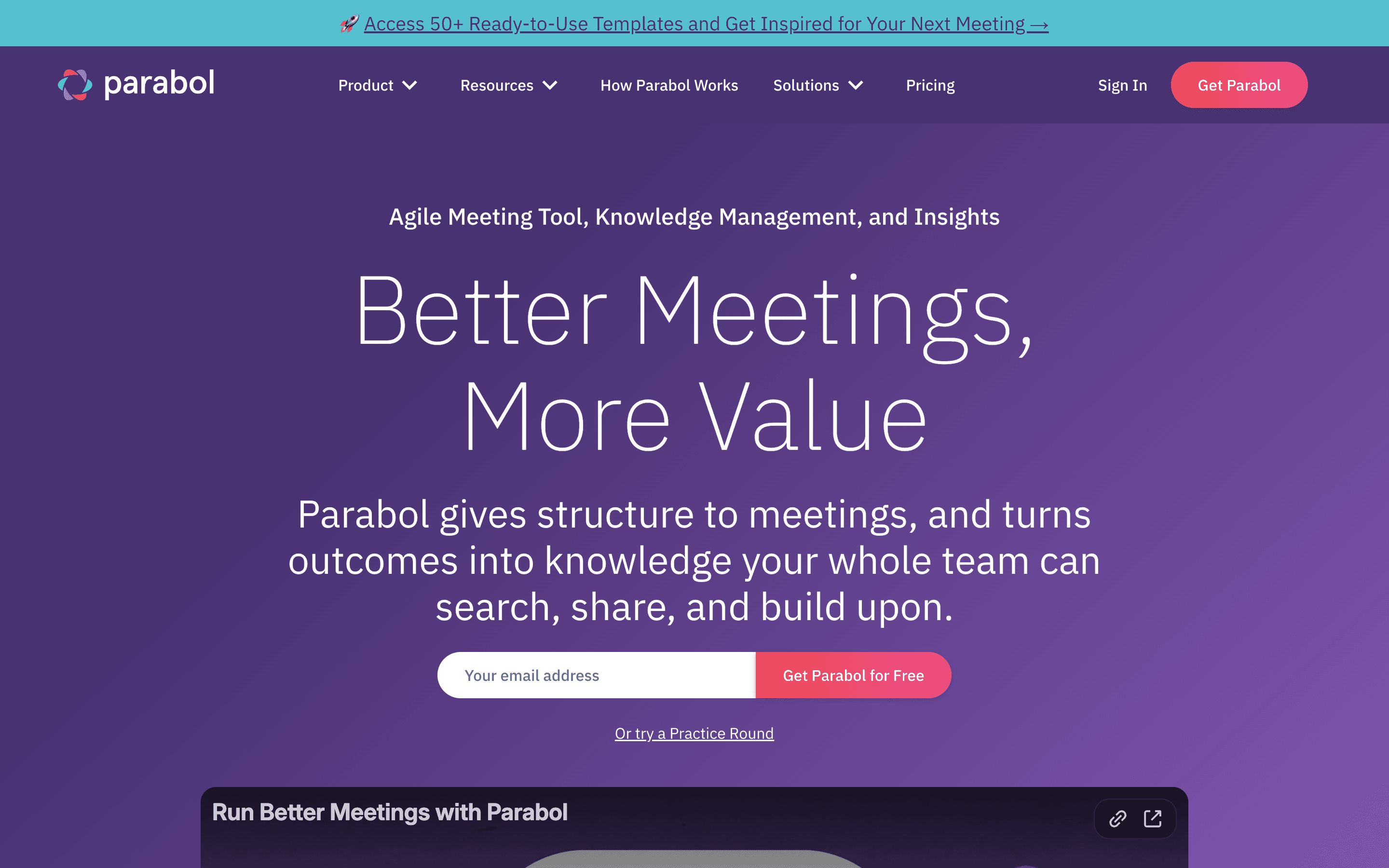
Parabol runs a guided facilitation flow (Reflect, Group, Vote, Discuss) that keeps meetings structured. During grouping, AI clusters related cards and auto-names the groups. If you've ever stared at 60 sticky notes trying to figure out which 12 say "deploy pipeline is slow" in slightly different words, you know why this matters. GoRetro gives facilitators manual controls (hide cards, toggle voting, set limits) but no guided workflow and no AI grouping. You're dragging and merging cards yourself.
Parabol's AI grouping handles the part of retros that drains facilitators most: sorting 50+ cards into themes. GoRetro requires manual drag-and-drop merging, which works for small teams but bogs down at 15+ people.
Beyond retros, the gap widens. Parabol has Sprint Poker with ticket import from Jira, GitHub, GitLab, and Linear. Estimates sync back automatically. Async standups with customizable questions. Team health checks on paid plans. GoRetro has planning poker too (Sprint Pro plan, $49/month), but only imports from Jira. No async estimation. No standups, just a standup-themed retro template. No health checks beyond a 1-5 happiness score.
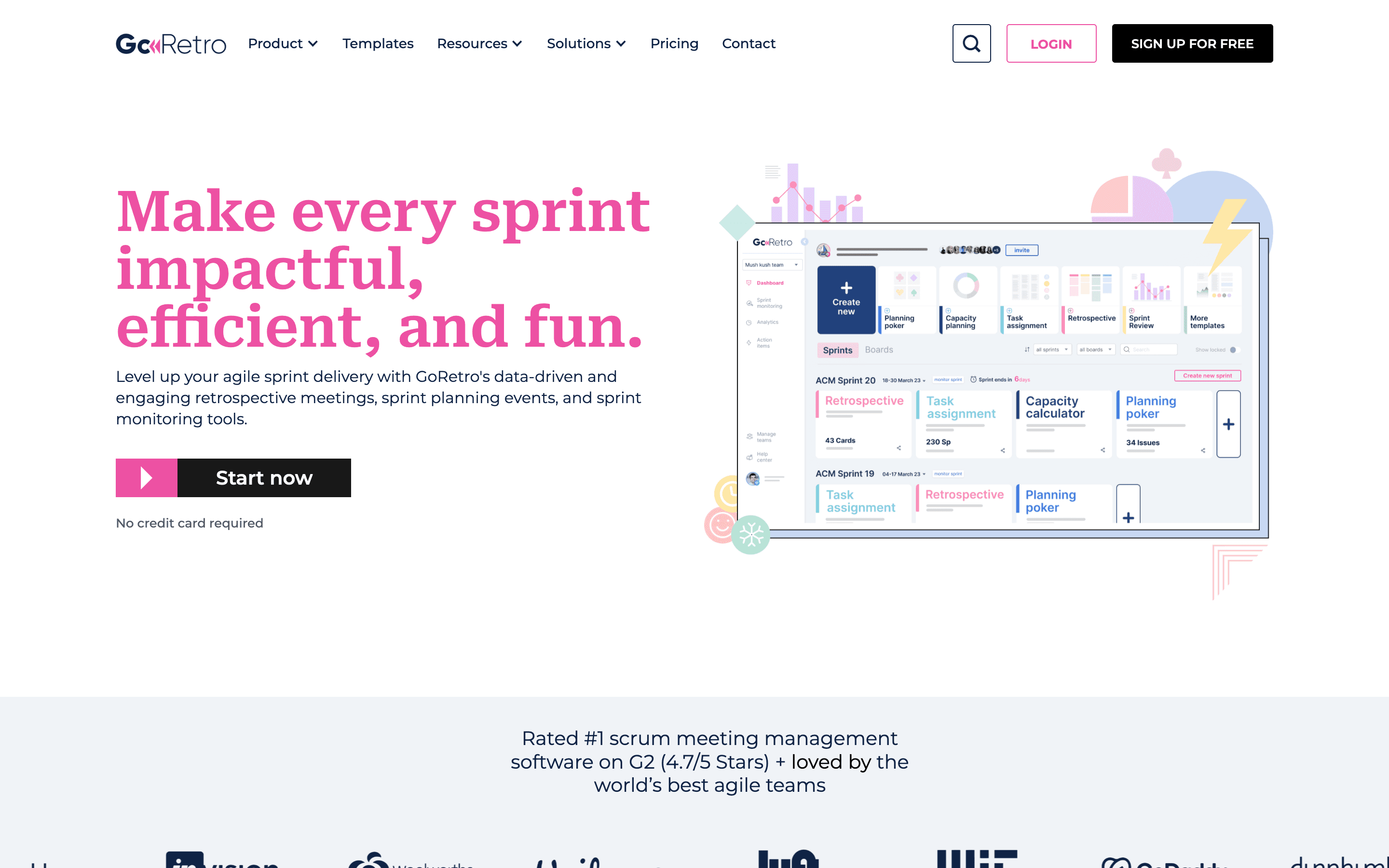
Where GoRetro pulls ahead is sprint monitoring. Connect Jira and GoRetro tracks velocity, analyzes cycle times, flags mid-sprint anomalies, and generates "Joker Cards," which are auto-generated discussion prompts from your sprint data. Parabol doesn't touch sprint analytics. If you want your retro tool to double as a sprint dashboard, GoRetro is the only option here.
Pricing Comparison
These tools price completely differently. GoRetro charges per team. Parabol charges per active user.

GoRetro
Premium plan, billed annually
- Free tier: 1 team, 5 boards, no exports
- Sprint Pro $49/mo adds planning poker
- Per-team pricing, unlimited users
- Organization plan: custom pricing with SSO

Parabol
Team plan — inactive users auto-excluded
- Free tier: 2 teams, 10 meetings/mo
- Retros, poker, standups all included
- AI grouping and summaries included
- Enterprise: SAML SSO, on-prem option
GoRetro's per-team model looks attractive at first. $29/month for unlimited users on Premium. But the free plan caps you at 5 boards and no exports, which is barely enough for a month of biweekly retros. Planning poker requires the $49/month Sprint Pro plan. SSO is gated behind custom enterprise pricing.
Parabol at $8/active user/month includes retros, poker, standups, AI features, and unlimited meetings. Users inactive for 30+ days automatically drop off your bill. A team of 8 costs $64/month. That's more than GoRetro's Premium, but includes poker (GoRetro charges $49 for that). At 12 people, Parabol hits $96/month versus GoRetro's $49 Sprint Pro. But you're getting standups, health checks, and 8 integrations that GoRetro doesn't have.
GoRetro's per-team pricing wins on raw cost for large teams that only need retros and Jira. But once you factor in planning poker ($49/mo) and the tools GoRetro doesn't have (standups, health checks, non-Jira integrations), Parabol's $8/user often delivers more value.
Ease of Use
GoRetro is faster to start. Pick a template, create a board, share the link. Guests join without accounts. You can be collecting feedback in under a minute. The interface is straightforward: columns, cards, votes. No phases to advance through, no meeting flow to learn.
Parabol asks everyone to create an account, which adds friction. The guided meeting flow (Reflect > Group > Vote > Discuss) takes a session or two to internalize. But that structure pays off. You can't accidentally skip voting or forget to assign action items. New Scrum Masters get guardrails. The flip side is that Parabol covers more ground (poker, standups, check-ins), so there's more to navigate.
Neither has native mobile apps. Parabol explicitly describes itself as a "mobile-first browser app." GoRetro's mobile experience isn't well-documented.
Integrations
Parabol wins this category easily. It connects to Jira, GitHub, GitLab, Linear, Azure DevOps, Slack, Microsoft Teams, Mattermost, and Confluence. Action items from retros push directly to your issue tracker. Sprint Poker imports tickets from Jira, GitHub, GitLab, and Linear, then syncs estimates back. These aren't notification-only connections. Work actually flows both directions.
GoRetro connects to Jira and Slack. No GitHub. No Linear. No Azure DevOps. No Confluence. No Microsoft Teams integration beyond a marketplace listing. If your engineering team tracks work anywhere outside Jira, you're copying action items by hand.
GoRetro's Jira integration does go deeper on the import side, pulling sprint data for velocity tracking, cycle time analysis, and the sprint monitoring dashboard. Parabol's Jira connection handles ticket import and estimate sync but doesn't analyze sprint performance. Different goals.
AI and Automation
Parabol's AI does two things well. Grouping clusters similar reflections during the affinity mapping phase and auto-names the groups. Summaries generate after each meeting and can ship to Slack or Teams. Both features are on paid plans (free plan gets 3 AI summaries).
GoRetro's AI story is murky. The marketing site references a "meeting recap" feature. But GoRetro's own retrospective features page doesn't mention AI anywhere, and competitor comparison pages consistently list AI summarization and grouping as missing. There may be a basic recap that isn't truly AI-powered, but it's hard to confirm.
If AI-assisted facilitation is on your checklist, Parabol is the safe choice. You can verify what it does. GoRetro's claims require a leap of faith.
Who Should Choose Which?
Choose GoRetro if…
- Your team lives in Jira and wants sprint monitoring baked into the retro tool
- You need a free tier to get started without a purchase order
- Per-team pricing matters more than per-user — your team is 15+ people who only need retros
- Sprint velocity tracking and capacity planning matter to your engineering leadership
Choose Parabol if…
- You run retros, poker, and standups and want one tool instead of three
- AI grouping matters — your retros generate 40+ cards and manual clustering is painful
- You track work in GitHub, GitLab, Linear, or Azure DevOps — not just Jira
- Open-source and self-hosting matter for your org's procurement or security requirements
- You want health checks and team check-ins alongside your retro practice
Final Recommendation
Parabol is the stronger pick for most agile teams. Retros, poker, standups, and health checks in one place, with AI you can actually verify and integrations that cover Jira, GitHub, GitLab, Linear, and Azure DevOps. Being open-source with a self-hosting option is something no other tool in this category offers.
GoRetro earns its spot for Jira-heavy teams that want sprint analytics inside their retro tool. The free tier helps when you're bootstrapping a retro practice before anyone's approved a budget. Per-team pricing works if you have a large team that only needs retros and Jira.
One thing worth mentioning: Parabol ships regular updates (v12.2.0 in February 2026) and has 85+ open-source contributors. GoRetro's last public changelog entry is from May 2023. That doesn't mean the product is abandoned, but you're buying a less transparent roadmap. For a tool your team relies on every sprint, that's worth weighing.