

Quick Verdict
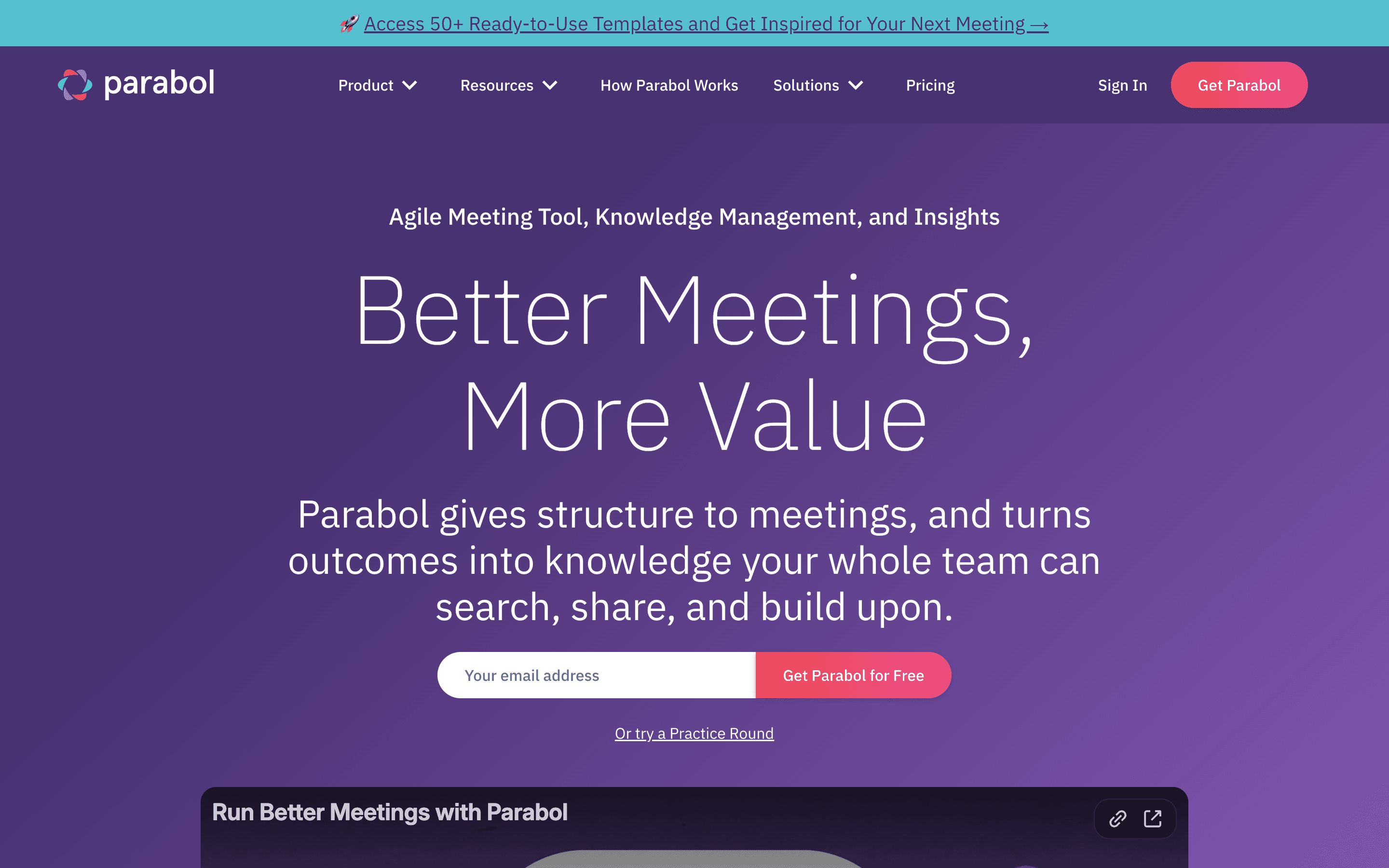
Parabol is the better all-around agile tool. It covers retros, planning poker, standups, and check-ins in one platform, with ticket import from Jira and GitHub and automatic estimate sync. For teams running standard Scrum ceremonies, it replaces multiple subscriptions.
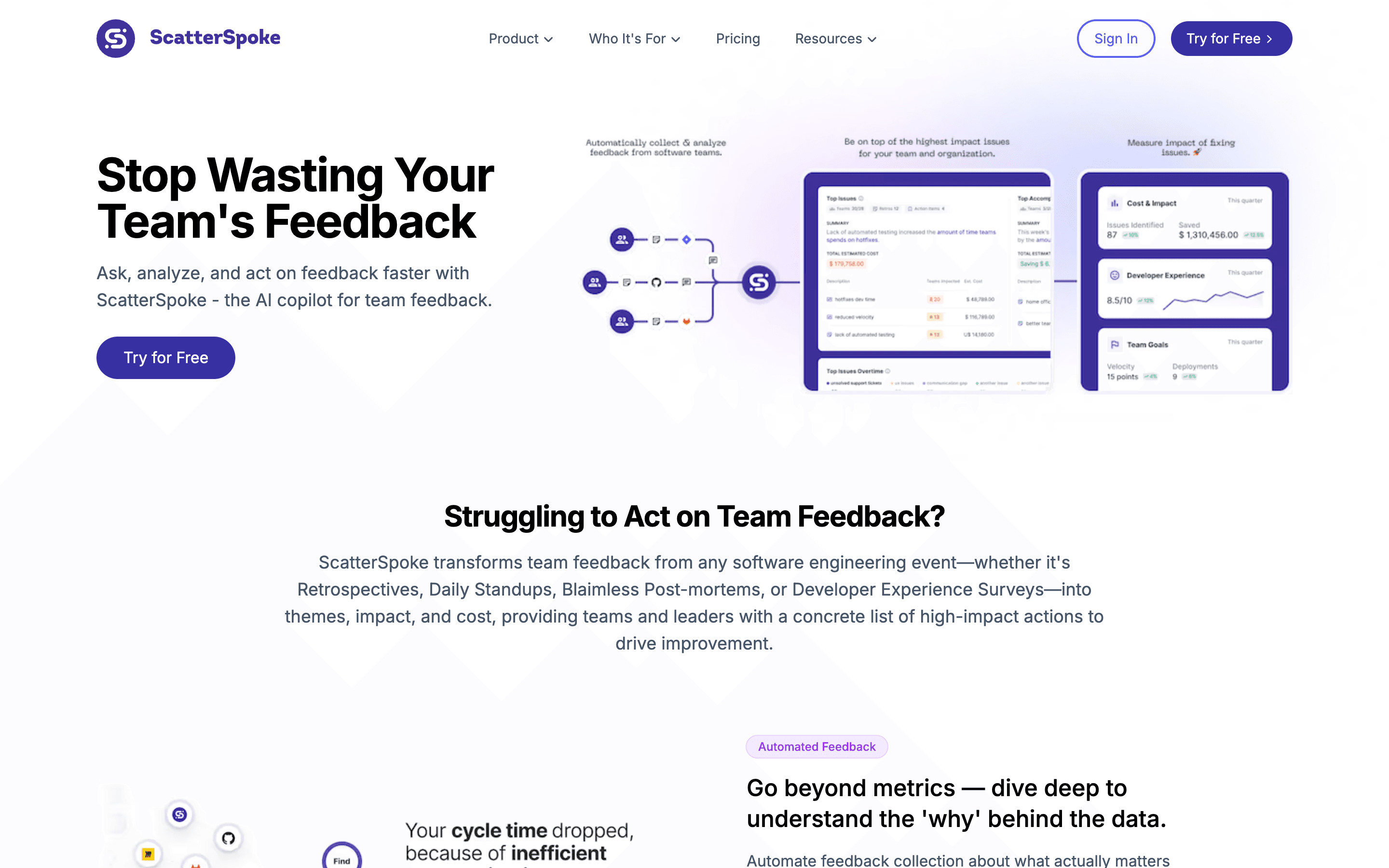
ScatterSpoke is the pick for engineering leaders who care more about data than ceremony breadth. Its sentiment tracking, cross-team analytics dashboards, and SOC 2 Type II certification fill a niche that Parabol doesn't touch. If you need to show the VP of Engineering a quarterly report on team health trends, ScatterSpoke actually generates that.
Most teams should start with Parabol. Teams that already have poker and standup tools and specifically want analytics-heavy retros should look at ScatterSpoke.
Feature Comparison
Both tools handle the retro basics: anonymous cards, voting, timers, action items, guided facilitation. The workflows feel different. Parabol uses Reflect > Group > Vote > Discuss. ScatterSpoke structures retros around its ~20 templates with built-in guidance that aims to let any team member facilitate without training.
The gap opens up outside of retros. Parabol includes Sprint Poker with ticket import from Jira (via JQL), GitHub, and GitLab, plus automatic estimate sync back to your backlog. It runs async standups with customizable questions and Slack/Teams notifications. ScatterSpoke has a "Stand Up Copilot" for async standups via Slack, Teams, or email, but no planning poker at all. If your team estimates stories, Parabol handles it. ScatterSpoke doesn't.
Where ScatterSpoke pulls ahead is analytics. Sentiment is tracked by theme (people, process, product) across meetings. Executive dashboards surface top issues and quantify their impact. Engagement metrics and participation tracking give facilitators visibility into who's contributing and who isn't. Parabol has meeting history and a basic timeline, but nothing close to this level of data.
ScatterSpoke's analytics go well past what most retro tools offer. Sentiment trends by theme, engagement metrics, and executive dashboards that quantify issue impact. It's built for engineering leaders writing quarterly reports, not just facilitators running Friday retros.
Parabol also has health checks (emoji-based polls in retros, paid plans only), 40+ retro templates, and custom template creation. ScatterSpoke adds blameless post-mortems and developer experience surveys as dedicated ceremony types. That matters if you're a platform engineering team running incident reviews alongside regular retros.
Pricing Comparison
These two use completely different pricing models, and the math swings depending on team size.

Parabol
Inactive users excluded automatically
- Retros, poker, standups included
- Free: 2 teams, 10 meetings/mo
- Per-user — scales with team size
- Enterprise: SSO, self-hosting, custom

ScatterSpoke
Flat rate — Starter tier
- Free: 1 team, 10 users, 90-day history
- Starter: 5 teams, 100 users
- Business ($300/mo): unlimited everything
- Enterprise: SSO/SCIM, custom AI prompts
For a team of 8, Parabol costs $64/month and includes retros, poker, and standups. ScatterSpoke's Starter plan costs $30/month but only covers retros and standups (no poker). That $30 covers up to 100 users across 5 teams, though, so if you're an org with 50 people, ScatterSpoke's flat rate is far cheaper than 50 × $8 = $400/month on Parabol.
The catch is ScatterSpoke's Business tier. At $300/month you unlock unlimited teams, unlimited AI reports, cross-team summaries, SOC 2 reports, and 13-month history. Parabol's Enterprise pricing is custom but typically less per-seat for mid-sized orgs. ScatterSpoke's Starter plan also limits you to just 2 integrations, which is tight if you use both Jira and Slack.
Ease of Use
Parabol's interface is busier because it covers more ground. You choose between retro, poker, standup, and check-in meetings, then follow a guided flow within each type. The learning curve is in understanding what each meeting type does, not in navigating the UI itself. Every participant needs an account, which adds onboarding friction for ad hoc sessions.
ScatterSpoke is more focused. You run retros. You set up standup copilots. That's mostly it. The facilitator experience leans on AI to handle grouping and summarization, which means less manual sorting. But the tool doesn't have responsive mobile web support, so running a retro with remote team members on phones is a problem. Parabol's web app is mobile-responsive and works in any browser.
ScatterSpoke has no mobile web support. If your distributed team includes members who join retros from phones or tablets, Parabol's mobile-responsive web app is the safer bet.
Integrations
Parabol's integrations are built around two-way data flow. Import Jira tickets via JQL for estimation, sync story points back. Pull GitHub and GitLab issues into Sprint Poker. Push action items from retros as new issues. Slack and Teams handle notifications and summary sharing. It also connects to Azure DevOps, Linear, and Confluence for exports.
ScatterSpoke works differently. Its Jira integration pulls metrics and coding activity data into AI-powered insights, reading your project data to find patterns rather than syncing tasks back and forth. The Slack integration is worth noting: a global shortcut lets you create retro cards, action items, and parking lot items from any channel. Trello gets action item export. GitHub and Bitbucket feed metrics into the analytics engine.
The tradeoff: Parabol moves work between your tools. ScatterSpoke reads from your tools to generate insights. If you want a retro tool that's part of your ticket workflow, Parabol fits. If you want a retro tool that analyzes your workflow, ScatterSpoke does that better.
AI and Automation
Parabol's AI groups related reflections using semantic similarity, then auto-names clusters. This saves 5-10 minutes on larger teams. AI summaries ship after meetings to Slack or email. AI icebreakers generate contextual questions. All AI features require the Team plan ($8/user/month).
ScatterSpoke calls its AI the "Retrospective Copilot." It flags the most-discussed topics across feedback, generates post-meeting summaries, and tracks sentiment by theme over time. The Stand Up Copilot asks targeted questions to async standup participants based on recent activity. On the Business plan ($300/month), cross-team AI summaries roll up retro data across your org for leadership reporting.
Neither tool does per-card sentiment analysis during a live retro. ScatterSpoke's sentiment tracking is longitudinal, showing trends over weeks and months. That's the kind of data an engineering director can put in a quarterly review. Parabol's AI is more useful in the meeting itself: grouping cards and naming clusters saves real time when you have 15 people writing reflections.
Who Should Choose Which?
Choose Parabol if…
- You run retros, planning poker, and standups and want one tool for all three
- Ticket import from Jira/GitHub/GitLab with auto estimate sync matters to your workflow
- Open-source is important — you need source code audits or self-hosting
- You want per-user pricing where inactive members drop off automatically
- Mobile-responsive access matters for your distributed team
Choose ScatterSpoke if…
- You need sentiment trends, engagement metrics, and executive dashboards from your retros
- SOC 2 Type II certification is a hard requirement today, not someday
- Flat-rate pricing makes more sense for your 50+ person org
- You run blameless post-mortems or developer experience surveys alongside retros
- Your Slack workflow is central and you want a global shortcut for creating retro items
Final Recommendation
Parabol is the better choice for teams that want one tool for their Scrum ceremonies. Retros, poker, standups, and check-ins in one place, with integrations that move data between your tools instead of just exporting it. The open-source codebase means enterprise procurement can audit the source before signing. Per-user pricing keeps it accessible for small teams too.
ScatterSpoke does something most retro tools don't. If you've run retros for a year and can't answer "how has team sentiment changed quarter over quarter," ScatterSpoke generates that answer. SOC 2 compliance and flat-rate pricing for large orgs help too. But without planning poker or mobile support, it's a specialized tool, not an all-in-one.
If you're choosing your first retro tool, go with Parabol. If you already have estimation and standup tools and want the deepest retro analytics on the market, ScatterSpoke is worth the look. For more context on running better retros regardless of tool, check our guide to running effective retrospectives.