
The Two People Who Talk Are Not Your Whole Team
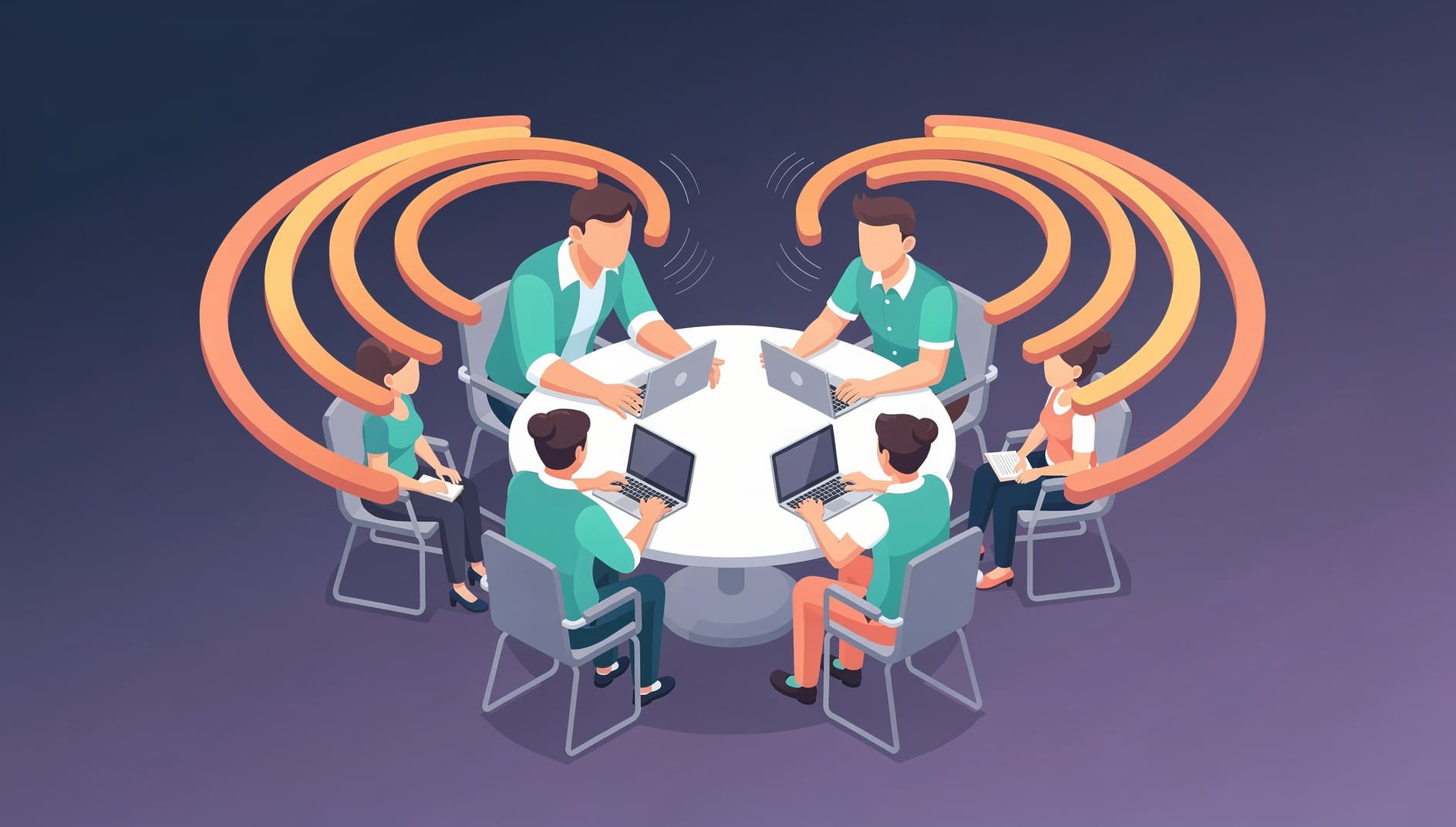
Watch your next retro with a stopwatch running in your head. Two people will do most of the talking. Maybe three. The tech lead, the loud senior, the one who's comfortable thinking out loud. Everyone else nods, adds a sticky note or two, and waits for it to be over. Forty-five minutes later you've got a board full of items that came from a quarter of the room.
It's tempting to read that as a personality split. The extroverts talk, the introverts don't, nothing to be done. That read is wrong, and it's costing you half of what your team actually noticed this sprint.
This isn't a quirk of your team. In a three-person group, the two highest-status people take roughly three-quarters of the airtime. The quiet half of your retro isn't checked out. The format is doing exactly what it's built to do.
It's Not Shyness. It's the Format.
Researchers have measured this in small groups for decades. The highest-status person tends to control close to half the talking, the second takes most of what's left, and everyone below them splits the scraps. Add more people and the top voice keeps its half while the rest get squeezed thinner.
Notice what that finding is about. Status and structure, not temperament. The quiet developer on your team isn't silent because they have nothing to say. They're silent because the default shape of a retro (open floor, talk when you have something, react on the spot) rewards one specific kind of person: fast talkers, people senior enough to feel safe, people who think by speaking instead of by writing.
You've probably seen the cost firsthand. The teammate who said nothing for three retros and then quietly dropped the idea that cut your deploy time had that idea the whole time. The format just never handed them a way in.
So the fix isn't coaxing the quiet ones to be louder. It's changing the structure so volume stops being the price of entry. The rest of this is three changes that do that, and none of them cost a thing. If your facilitation fundamentals are shaky to begin with, start with how to run a great retrospective and come back.
Make Everyone Write First
The single biggest change is also the simplest: nobody talks until everybody has written.
Give the team five minutes of silence at the start to put their own items on the board before a word is said out loud. No discussion, no reacting, just independent generation. It sounds too basic to matter. It changes the whole session.
When people write first, the loud person's take doesn't anchor the room before anyone else has formed one. The junior engineer commits their observation while it's still theirs, not after the senior has already framed the sprint a certain way. You end up with the real spread of what the team saw, instead of five variations on whatever the first speaker said.
Most tools do this by default, which is a quiet argument for using one over a shared doc where the first person to type sets the tone. An async retro pushes the idea further: everyone contributes on their own time, and the person who needs an hour to find the right words actually gets it.

Separate Surfacing From Discussing
Writing first decides who gets items onto the board. The next question is whose items get discussed, and if you go top to bottom or drift toward whatever the loudest person points at, you've handed the agenda right back to the same two people.
Split it into two steps. Surface everything, then vote on what's worth the time, and do the voting before any discussion starts. Dot voting, anonymous, everyone gets the same three votes. The order you work through comes from the whole team, not from who argued hardest for their own item.
Anonymity matters more here than people expect. A few small facilitation habits quietly undo it:
- Read a sticky note aloud and ask whose it is
- Let discussion start before everyone has finished writing
- Work the board top to bottom by who posted first
- Share your own read of the sprint before the team shares theirs
- Call on the quiet ones by name to 'get their thoughts'
When entries and votes carry no name, a critique of the deploy process stops being "the new hire complaining" and becomes an item with four votes. Most decent tools support this out of the box. Parabol and Retrium are built around anonymous entry and structured voting; EasyRetro and Kollabe both let people add cards without a name attached. The feature is cheap. On a team that doesn't fully trust each other yet, the effect isn't.
Stop Letting the Loudest Person Go First
Even with writing and voting sorted, the discussion itself can still collapse into a two-person conversation. The fix is to take turn-order out of the room's hands.
Round-robin is the bluntest version, and it works. Go person by person, each gets thirty seconds to react to the top item, and you say out loud that "pass" is a complete answer. The quiet people get a guaranteed turn; the loud people get a ceiling. Within a sprint or two, the ones who never used to volunteer start showing up with something ready, because they know the turn is coming.
Rotate the facilitator while you're at it. Whoever runs the retro shapes it more than anyone in the room, and if it's always the same lead, the meeting always has the same center of gravity. Pass it around. When nobody wants to decide who kicks off or who runs it next, don't overthink it. Flip a coin and move on.
If you facilitate and you're also the team lead, speak last or not at all. The moment you offer your read of the sprint, you've set the ceiling on how honest everyone else is willing to be.
The Quiet Half Is Your Best Material
The two people who always talk aren't a problem to be muzzled. They're just the people the default format happens to serve. The other half of the room watched the same sprint from a different seat, and a lot of what you most need to hear lives with them: the process that's quietly broken, the thing nobody will say into an open floor.
Change the structure, not the personalities. Write first, vote before you discuss, rotate who leads. All of it is free and all of it is reversible by next sprint if it flops. You'll know it's working when the board stops sounding like one person and starts sounding like a team.
Want the Full Facilitation Playbook?
Equal participation is one piece. Here's how to run a retro that leads to real change, start to finish.
Read the Guide