

Five Warm-Ups That Get a Remote Team Talking Before the Retro
You can tell in the first two minutes whether a retro is going to be any good. Cameras half on, somebody finishing lunch, two or three people who haven't said a word since standup. You ask "so, how was the sprint?" and the silence that comes back has a texture to it.
That silence is not a people problem. It's a cold-start problem.
You walked a distributed team straight out of whatever they were doing and into a meeting that asks them to be candid, and you gave them no runway to switch gears. Of course they're quiet. So the warm-up isn't a nicety you tack on if there's time. It's the thing that decides whether anyone talks at all.
There's an old facilitator's rule: if someone doesn't speak in the first five minutes, they probably won't speak for the rest of the hour. A warm-up exists to get every voice on the record once, early, while the stakes are still low.
What a Good Warm-Up Actually Does
A warm-up has one job. Get every person to say or do something before the real conversation starts. Everything else is decoration.
For a remote team that means keeping it short, explaining it in a single sentence, and picking a format that pulls in the quiet ones instead of handing the floor to the same two people who always talk. A game that only the loudest person enjoys isn't a warm-up. It's a performance.
- Keep it under five minutes, ten at the very most
- Explain the whole thing in one sentence
- Make sure every person speaks or acts at least once
- Keep it low-stakes, not a personality test in disguise
- Match the mood loosely to the retro you want
Five Warm-Ups Worth Stealing
These aren't ranked best to worst. They suit different teams. I'll start with the two I reach for most, then three you can run with nothing but the video call you're already on.
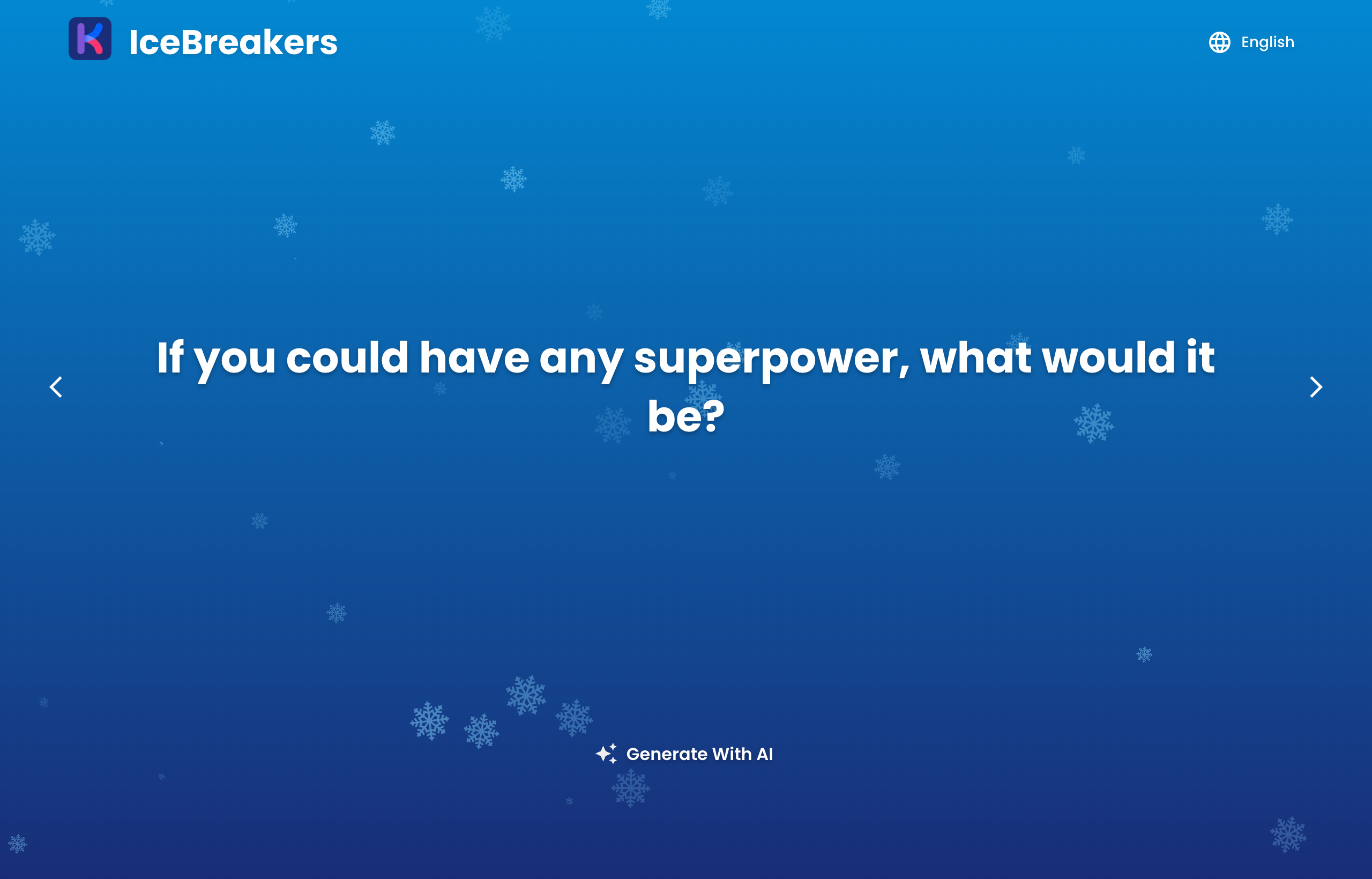
1. Kollabe's icebreaker generator. Kollabe runs a free icebreaker page at kollabe.com/icebreaker with 500-plus questions sorted by mood and by how long they take, from a thirty-second one-liner to a five-minute round. You hit generate, read the question out, and go around the call. If you already run your retro in Kollabe it drops straight into the board, and if you don't, the page is free to use on its own with nothing to sign up for. I like it for the days I've done zero prep and just want a prompt that won't feel like a corporate trust exercise.
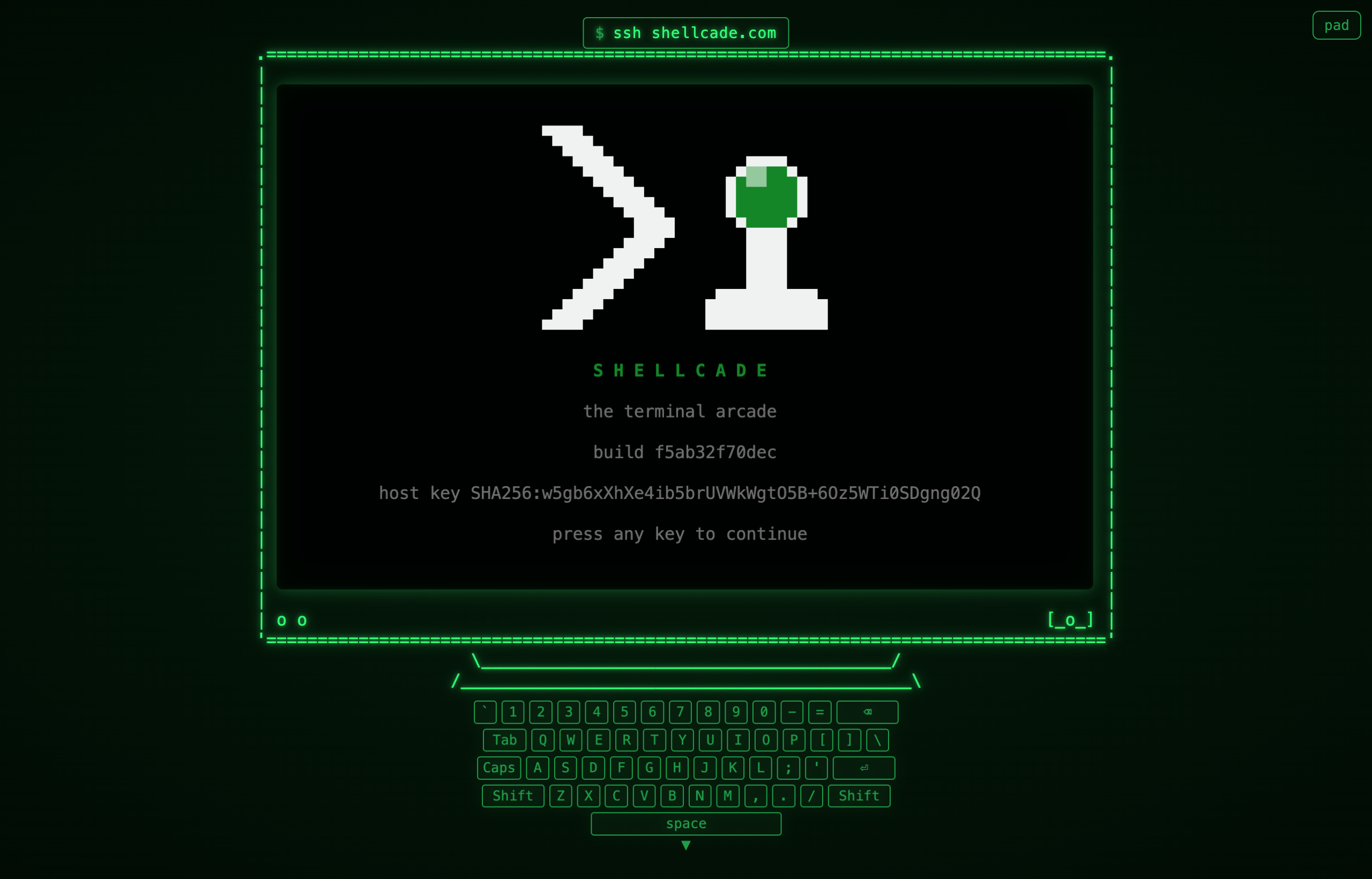
2. Shellcade, for teams that would rather play than share. Some engineering teams will never warm to "describe your sprint as a weather report," and you shouldn't make them. For that crowd, Shellcade is the move. It's an arcade of multiplayer games you play inside your terminal. Run ssh shellcade.com, or use the in-browser terminal if someone's locked down, and you land in a lobby with sixteen-plus games, from a quick lap of Shell Racer to a couple of hands of blackjack. It's free and there's nothing to install. One honest caveat: it's built for people who live in a terminal. A room of designers and PMs will look at you sideways. A squad of backend engineers will lose four happy minutes to it and show up to the retro loose and actually laughing.
3. Two Truths and a Lie. The old classic survives because it works remotely with zero setup. Everyone drops three statements about themselves into the chat, two true and one invented, and the group guesses the lie. It earns its place by making every person type something and every person react to someone else. Cap it at one round each or it quietly eats your whole retro.
4. The one-word check-in. Ask a question that takes exactly one word to answer, then go around the call. "Your sprint as a weather report." "One word for how you're walking into this retro." It's the fastest way to honor the speak-early rule, and the words themselves give you a free read on the room before you've asked a single real question. To stop the same person always going first, let a coin flip pick the starting order.
5. A quick drawing game. When the team needs real energy and not just a check-in, open Gartic Phone or skribbl.io for one fast round. The chaos of a terrible drawing flattens the hierarchy in a way a question can't. The new hire and the staff engineer both look equally ridiculous, which is the entire point. Five minutes, then close the tab and open the board.
Put a visible timer on the warm-up, the same way you would for any retro activity. The goal is a running start, not a second meeting. When the timer goes, move to the board even if the game is still fun. Leaving people wanting a bit more is how the warm-up stays welcome next sprint.
Match It to the Team in Front of You
The warm-up that works is simply the one your specific team won't roll its eyes at.
A new or cross-functional group needs the gentle on-ramp of a question, where there's no wrong answer and nobody has to be clever. A tight engineering team wants a game and will resent a feelings round. A team that's seen every format twice needs you to keep changing it, so the warm-up itself doesn't slide into autopilot like the retro did.
Most retro platforms now bake in an icebreaker step, Parabol and Metro Retro among them, so if your tool already has one, the lowest-effort move is to just use it. The point isn't which game you run. It's that you run something.
One thing to flag: this is all about live retros. An async retro warms up differently, usually with a single kickoff prompt people answer in their own time, not a game on a call. Either way, treat the warm-up as part of setting the stage rather than a bonus. The five minutes you spend getting people talking are what make the next fifty worth sitting through.
The Warm-Up Is the Easy Part
Getting people talking is step one. Browse the tools and formats that carry the rest of the retro.
Browse All Tools